

How Elevating Sterile Ultrasound Probe Cover Standards Shields Patients and Streamlines Hospital Procurement Workflows
1. Understanding Mucosal Safety and Cross-Contamination Hazards in Ultrasound Procedures
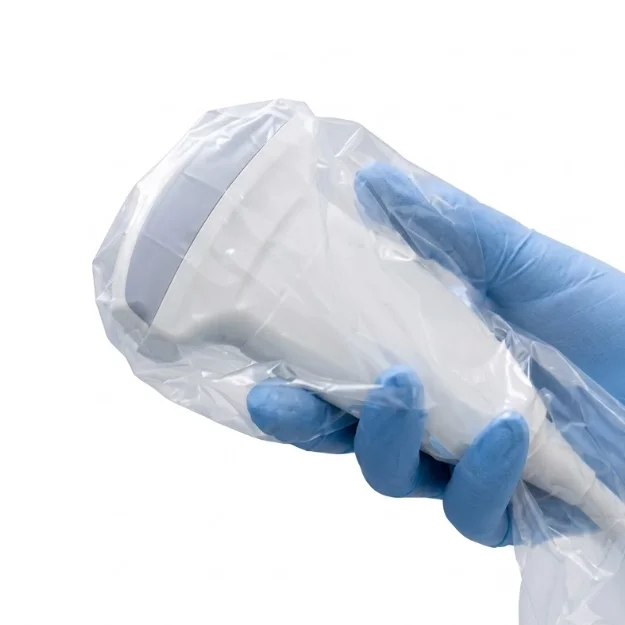
In everyday clinical practice, ultrasound examination has expanded far beyond routine non-invasive abdominal screening. Point-of-care ultrasound (POCUS), interventional radiology, intraoperative guidance, and endocavitary imaging place ultrasound transducers in direct contact with non-intact skin, mucosal membranes, and sterile surgical fields. Transducers are high-touch devices, and improper barrier protection creates direct vectors for healthcare-associated infections (HAIs). A robust sterile ultrasound probe cover functions as an indispensable physical barrier, preventing pathogen transference such as Human Papillomavirus (HPV), Pseudomonas aeruginosa, and multi-drug resistant organisms between consecutive patients.
What we often see in hospital risk management audits is that relying solely on chemical high-level disinfection (HLD) between patient encounters leaves operational vulnerabilities. While HLD protocols are vital, micro-tears in transducer housing or minor chemical residual exposure can compromise patient comfort and device longevity. Utilizing a dedicated sterile cover for ultrasound probe deployments provides a reliable dual-layer security model. Medical-grade polyurethane or polyisoprene covers isolate the transducer completely, protecting delicate mucosal tissues from potential chemical irritation caused by disinfectant residues while preserving optical clarity and acoustic integrity required for precise diagnostic imaging.
From an administrative perspective, integrating consistent barrier protection directly aligns with guidelines established by the Centers for Disease Control and Prevention (CDC) and the American Institute of Ultrasound in Medicine (AIUM). Procurement teams that prioritize high-tensile strength, viral-impermeable probe sheaths substantially reduce institutional liability, decrease post-procedural complication tracking, and support overall hospital accreditation standards without degrading clinical diagnostic precision.
2. Evaluating Material Performance: Polyurethane vs. Latex vs. Polyethylene in Clinical Settings
Selecting the optimal material for ultrasound sheaths requires a balance between acoustic transmission, tear resistance, tactile feedback, and patient allergen safety. Historically, natural rubber latex served as the industry default due to high elasticity. However, widespread latex hypersensitivity among patients and healthcare personnel has forced modern healthcare systems to transition toward advanced synthetic polymer formulations.
| Material Feature | Polyurethane (PU) | Natural Rubber Latex | Polyethylene (PE) |
| Acoustic Clarity | Superior (Low acoustic attenuation) | Moderate | Variable (Prone to fold artifact) |
| Allergen Risk | 100% Latex-Free / Hypoallergenic | High Risk (Type I Hypersensitivity) | Latex-Free / Inert |
| Puncture Resistance | Exceptional tensile elasticity | High elasticity / Moderate puncture | Moderate / Poor tear propagation |
| Clinical Application | Endocavitary, OR, Interventional | General non-critical screening | Basic external abdominal scans |
In high-acuity environments like emergency departments and surgical suites, polyurethane stands out as the premium material choice. Its molecular structure permits ultrathin manufacturing without sacrificing resistance to sharp needle punctures during ultrasound-guided nerve blocks or vascular access procedures. Unlike traditional polyethylene sheaths, which can create rigid folds that trap air pockets and distort image resolution, custom-fit polyurethane contours smoothly around complex transducer heads.
For hospital buyers, evaluating long-term material viability means assessing both clinical efficiency and patient safety. Standardizing on synthetic, hypoallergenic probe sheath inventory streamlines warehouse management by eliminating the need to maintain parallel stock for latex-sensitive individuals. Furthermore, durable materials minimize sheath rupture during high-stress interventional procedures, reducing the frequency of unscheduled room downtime for urgent transducer decontamination.
3. Standardizing Endocavitary Workflows with Dedicated Transvaginal Ultrasound Probe Cover Systems
Endocavitary examinations present unique infection control and patient handling challenges. Procedures involving gynaecological, obstetrical, or urological assessments require specialized barrier solutions designed specifically for elongated, narrow transducer geometries. Deploying a dedicated transvaginal ultrasound probe cover ensures uniform fit, prevents sliding during movement, and maintains complete coverage across the entire insertion length of the probe shaft.
In daily clinical workflows, sonographers and gynaecological clinicians frequently face challenges when using non-specialized or generic elastomeric sheaths. Generic covers often suffer from tight fit stress, leading to microscopic pinhole fractures under continuous friction. Modern engineered endocavitary covers incorporate seamless end-designs and pre-gelled interior tips or streamlined roll-on configurations. This engineering significantly reduces air entrapment between the probe face and the cover sheath, eliminating acoustic artifacts that could obscure subtle tissue structures, early stage embryonic monitoring, or pelvic pathology detection.
From a procurement perspective, integrating specialized endocavitary covers within standard clinical trays directly influences patient satisfaction and operational throughput. Smooth exterior surfaces minimize mucosal friction, enhancing patient comfort during examination. Concurrently, standardized roll-on designs decrease pre-procedure setup time, allowing clinical staff to maintain consistent appointment scheduling while staying fully compliant with rigorous infection prevention protocols.
4. Workflow Optimization Through Integrated Ultrasound Probe Cover Kit Configurations
Efficiency in clinical environments depends heavily on procedural standardization. When performing ultrasound-guided central line placements, joint injections, or regional anesthesia, clinicians must assemble multiple sterile consumables rapidly. Procuring an all-in-one ultrasound probe cover kit transforms fragmented supply gathering into a standardized single-step prep process.
A typical high-performance kit includes a sterile sheath, a pre-measured packet of sterile acoustic coupling gel, surgical securing bands, and a sterile field drape. In practice, this pre-packaged assembly eliminates procedural delays caused by missing components or mismatched gel packets.
- Enhanced Sterile Technique: Pre-assembled kits ensure all components meet identical sterility assurance levels (SAL $10^{-6}$), mitigating risk during invasive needle guidance.
- Waste Reduction: Standardized kit packaging eliminates surplus inventory disposal, aligning material usage directly with specific procedure types.
- Rapid Room Turnover: Emergency and ICU teams can initiate critical bedside imaging immediately without searching through separate supply cabinets.
For materials management and hospital purchasing agents, bundled kits offer significant logisitical advantages. Purchasing complete procedural kits reduces individual stock-keeping unit (SKU) management across central stores. Additionally, single-use, fully contained kits simplify cost accounting per clinical case, giving financial officers transparent data regarding procedural operational expenses across surgical, radiology, and emergency departments.
5. Critical Inspection Criteria for Bulk Procurement and B2B Medical Supply Chains
Hospital procurement administrators and international distributors evaluating B2B manufacturing partners for ultrasound probe sterile cover inventories must look beyond unit price. Quality assurance in high-volume production dictates clinical safety and brand reputation. Key technical evaluation factors include pinhole leak testing metrics (such as water tightness and air inflation standards), viral penetration resistance testing under ASTM F1671 protocols, and package seal integrity.
When negotiating supply agreements, purchasing managers should verify compliance with international regulatory frameworks, including ISO 13485 certification, CE marking under Medical Device Regulation (MDR), and FDA 510(k) clearances. Manufacturing facility audits should focus on cleanroom classification (Class 100,000 / ISO Class 8 environments) and automated optical inspection systems that detect subtle material inconsistencies before final packaging and EO (Ethylene Oxide) or Gamma sterilization.
Furthermore, supply chain resilience plays a pivotal role in vendor selection. Reliable supply partners provide flexible OEM/ODM packaging options, continuous supply volume guarantees, and clear shelf-life indicators (typically 3 to 5 years under controlled storage). Establishing long-term relationships with compliant, high-capacity manufacturers shields healthcare networks from sudden stockouts, supporting uninterrupted patient care delivery across all operational units.
6. Implementation Protocols: Training Staff and Maintaining Compliance Across Departments
Acquiring high-quality medical supplies is only half the battle; ensuring consistent clinical adherence to sheath application protocols completes the safety cycle. Improper application of an ultrasound sheath can lead to trapped air bubbles—resulting in poor signal transmission—or accidental contamination of the sterile field during sheath deployment.
Best practice guidelines recommend standardized clinical training modules focusing on telescopic sheath application techniques. Clinicians should be trained to apply sterile gel inside the cover tip, insert the probe while maintaining sterile glove integrity, pull the sheath down the cable with a continuous motion, and secure the assembly using sterile bands without pinching the transducer housing.
What we often observe in high-performing healthcare networks is the implementation of unit-level compliance checklists coupled with routine clinical audits. Hospital infection control committees should regularly review sheath integrity rates, monitor post-procedure cleaning logs, and gather nursing feedback on material usability. By creating a continuous feedback loop between clinical end-users and procurement specialists, healthcare facilities ensure that selected ultrasound probe barrier solutions satisfy both rigorous clinical standards and long-term financial objectives.
📚 References
- AIUM Practice Parameter for the Cleaning and Decontamination of Transcutaneous and Endocavitary Ultrasound Transducers (American Institute of Ultrasound in Medicine Guidelines).
- CDC Guideline for Disinfection and Sterilization in Healthcare Facilities, Centers for Disease Control and Prevention.
- EPOS (European Position Paper on Rhinosinusitis and Nasal Polyps) – Standards on Infection Prevention in Clinical Procedures.
- ASTM F1671: Standard Test Method for Resistance of Materials Used in Protective Clothing to Penetration by Blood-Borne Pathogens Using Viral Penetration System.
- ISO 13485:2016: Medical devices — Quality management systems — Requirements for regulatory purposes.